Trading Journal Analysis: A Practical Review Workflow
Learn how to analyze a trading journal by separating strategy, market regime, execution, risk, and costs—then turn recurring observations into testable hypotheses.
Read more →Learn more about Kvants AI. Latest news, insights, trading strategies and AI trading technology advancements.
Compare no-code and coded backtesting by strategy complexity, execution realism, auditability, and maintenance—and learn when a hybrid workflow makes more sense.
Read moreLearn how to analyze a trading journal by separating strategy, market regime, execution, risk, and costs—then turn recurring observations into testable hypotheses.
Read more →Learn how to reduce false breakouts with objective level definitions, close and volatility filters, retest rules, and a testing workflow that measures every trade-off.
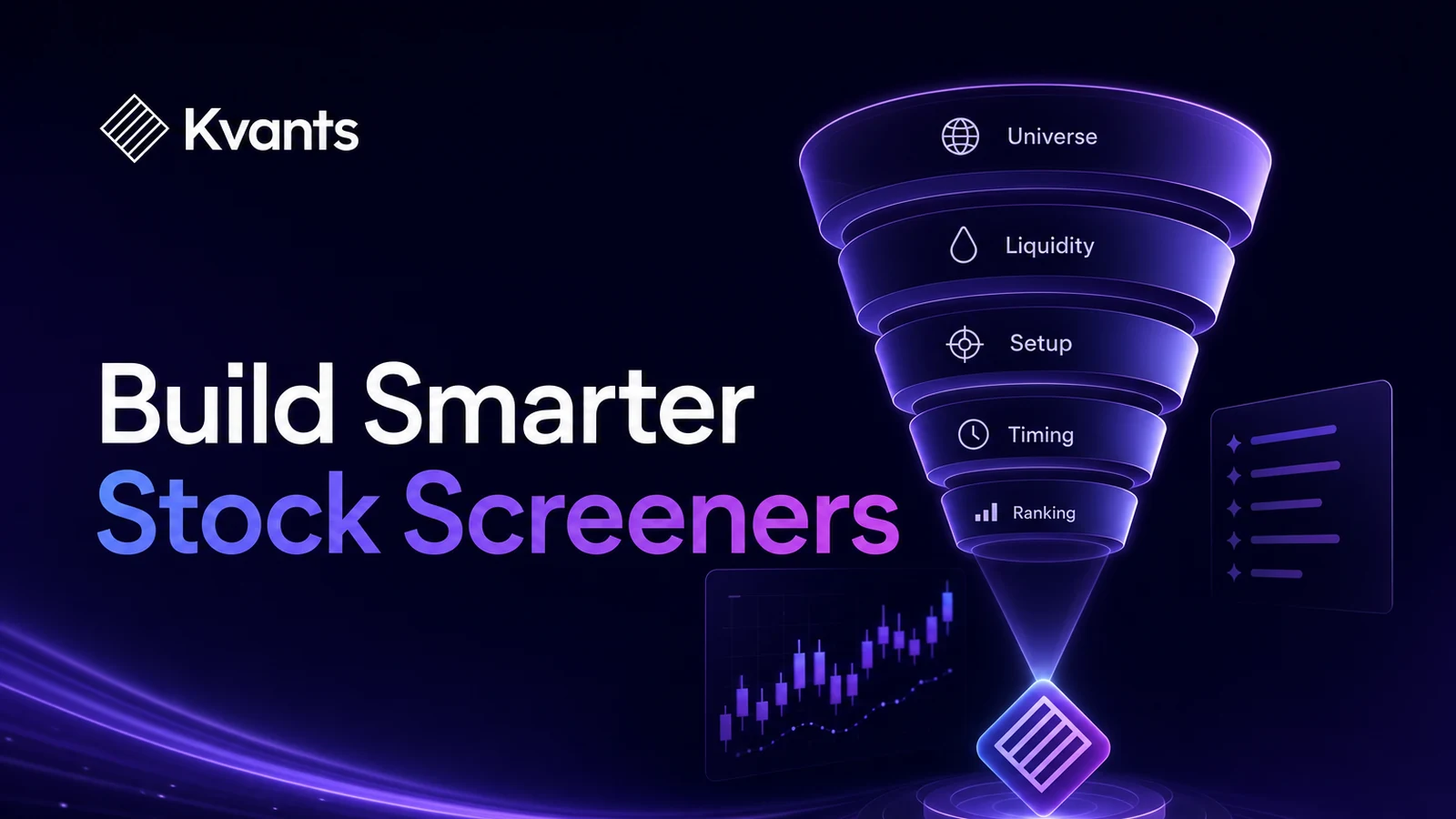
Read more →Learn how to build a stock screener using layered rules for universe, liquidity, setup, timing, and ranking—then test whether its signals are actually useful.
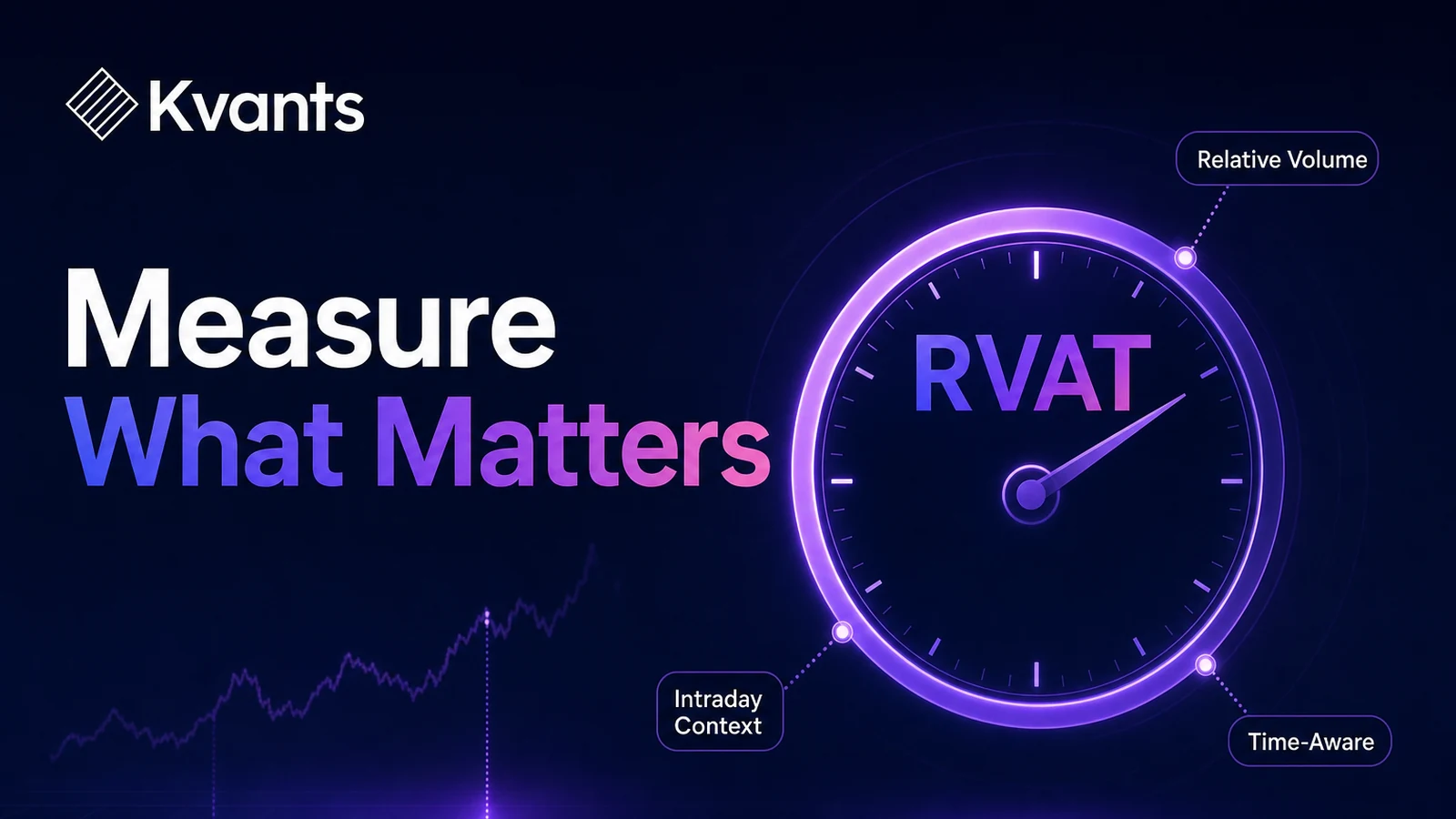
Read more →Learn how relative volume at time normalizes intraday activity, how to build it without look-ahead bias, and how to test RVAT as a breakout or liquidity filter.
Read more →Learn how to turn a trading hypothesis into exact rules, test it with realistic data and costs, validate it out of sample, and move carefully into paper trading.
Read more →Turn the hammer candlestick into objective trading rules. Learn how to define the pattern, require confirmation, manage risk, and backtest the complete setup.
Read more →Learn how an AI trading strategy builder should translate plain-English ideas into inspectable rules, executable tests, and evidence-based validation workflows.
Read more →Learn how to validate a trading strategy through rule audits, out-of-sample tests, parameter checks, stress tests, and paper trading before risking capital.
Read more →